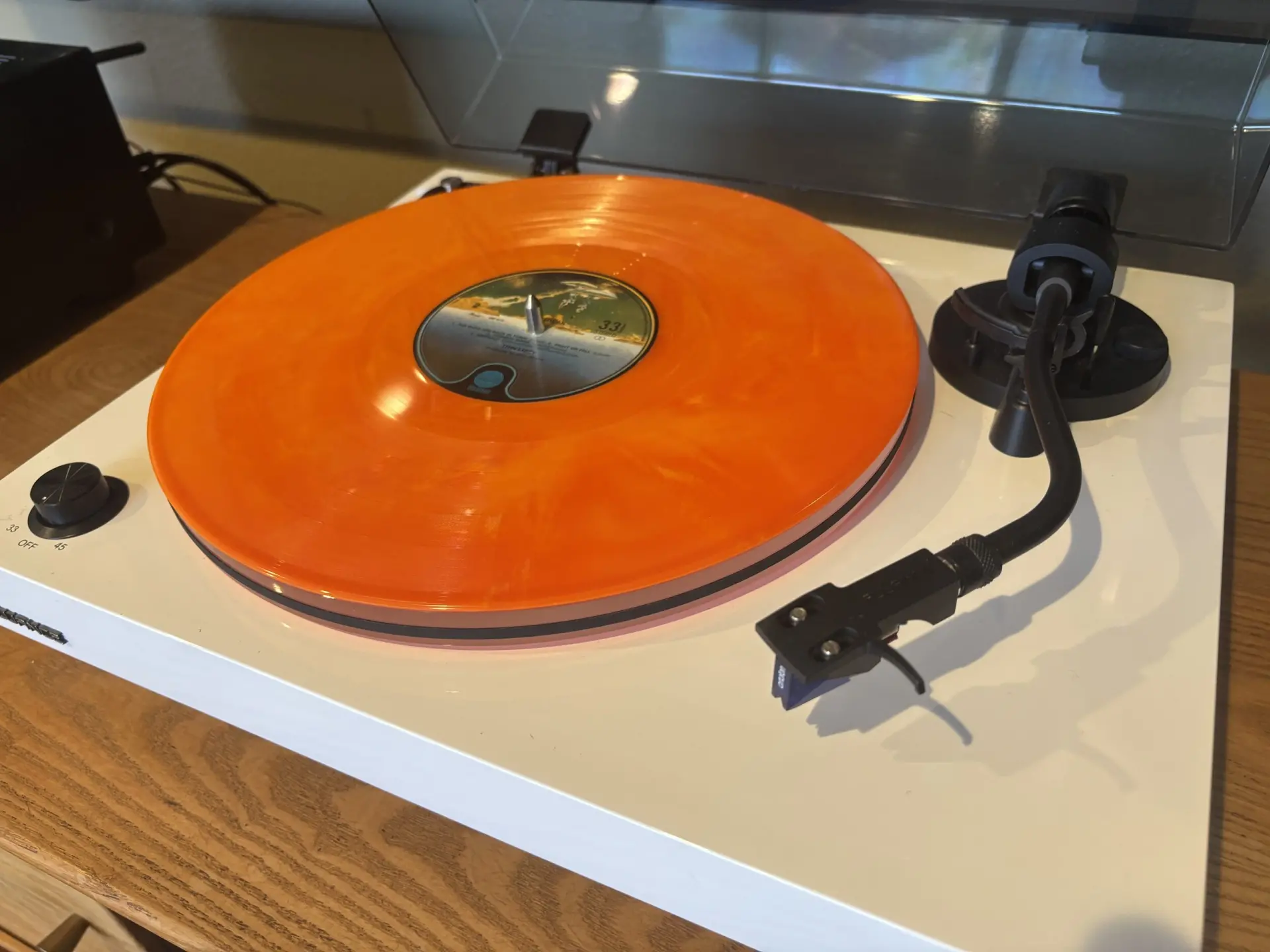
So you’ve started collecting records, or at least you’re thinking about it—and now the big question: what turntable should you get? Starting off on the right foot makes all the difference in your vinyl hobby, and over the years at Invincible Vinyl I’ve seen many folks make small mistakes that cost them time, money or frustration. Let’s walk through what matters, what doesn’t, and how to pick a turntable that will serve you well for years.
1. Know Your Budget & Setup
First: set a realistic budget. Entry-level turntables fall somewhere in the “good start” zone—not ultra-cheap junk, but not high-end audiophile gear either. According to beginners guides, you’ll find decent models for $100-$300 that are plug-and-play.
Second: check your setup. Do you have powered speakers or a stereo receiver? Does your system require a phono preamp, or does the turntable include one built-in? These are often overlooked until you unbox the gear.
2. Drive Type: Belt vs. Direct
-
Belt-drive: The platter is driven by a rubber belt, which often lowers motor noise and vibration. Many good entry-level models use belt-drive.
-
Direct-drive: The platter is driven directly by the motor. More common in DJ/serious setups, and sometimes offers better speed stability but may cost more.
For beginners, a good belt-drive turntable with a built-in preamp is usually a safe and sensible choice.
3. Built-in Phono Preamp & Connectivity
Vinyl records output a very low-level “phono” signal which normally needs amplification and equalization (RIAA curve) to be heard properly. Many modern turntables for beginners include a built-in phono preamp so you can plug directly into powered speakers or a line-input on a receiver. That simplifies things a lot.
Also consider connectivity: Do you want USB output (to digitize your records)? Bluetooth? These add convenience but may trade off slightly on upgrade potential.
4. Cartridge, Tone-arm Quality & Upgrade Potential
The cartridge (the needle + cartridge assembly) and tone-arm impact how well your records play, how much wear they incur, how well they resolve detail. Entry-level models will often have fixed cartridges, fewer adjustment features, but that’s fine to start. As you grow, you might want a turntable with adjustable tracking force, anti-skate, upgradeable cartridge.
If you start with an inexpensive model, plan for what you’d like to upgrade later so you’re not locked out.
5. Build Quality, Isolation & Vibration Control
Turntables are mechanical devices. Platter speed stability, vibration isolation (so your foot doesn’t cause skipping), tone-arm stability all matter for good sound and safe playback (to protect your records). Even in beginner models you’ll want something decently built, not a cheap suitcase-style all-in-one that will hurt your records. As one vinyl community user put it:
“I just got into the hobby … had one of those Crosley suitcase players … as soon as I started listening to a record, I knew it was trash.
6. What to Avoid
-
“All-in-one” novelty players with built-in tiny speakers → fun for decoration but not for serious listening or record preservation.
-
Turntables without preamp if you don’t already have a phono stage.
-
Very low cost models (< ~$100) that sacrifice tone-arm quality, cartridge, drivetrain. They may serve, but expect limitations.
-
Buying strictly because of “retro style” without paying attention to specs that matter (cartridge, drive, connectivity).
7. Your Starting Checklist
Here’s a quick checklist you can use when comparing models:
-
Plays both 33 ⅓ and 45 RPM (and maybe 78 if you collect old shellac)
-
Belt or direct drive with stable speed
-
Built-in (or switchable) phono preamp if you don’t have one
-
Adjustable tone-arm or at least a decent fixed one
-
Good build, decent platter, dust cover
-
Upgrade friendly (cartridge replaceable) if you want to grow
-
Good reviews for “quiet motor, minimal vibration, clean tone”
8. Patience & Growth Mindset
Starting out, don’t feel like you need to buy the most expensive gear to sound “good.” A clean record, decent turntable and decent speakers will get you immersed. As your collection grows (and as you learn what nuances you want), you can upgrade one component at a time. The joy is in the journey, not just the gear.
At Invincible Vinyl, we say: Buy what you can afford, enjoy it, and leave room to upgrade later. When your gear is good enough that you’re still discovering things in the music—not fighting your setup—you’re doing it right.
Happy spinning.