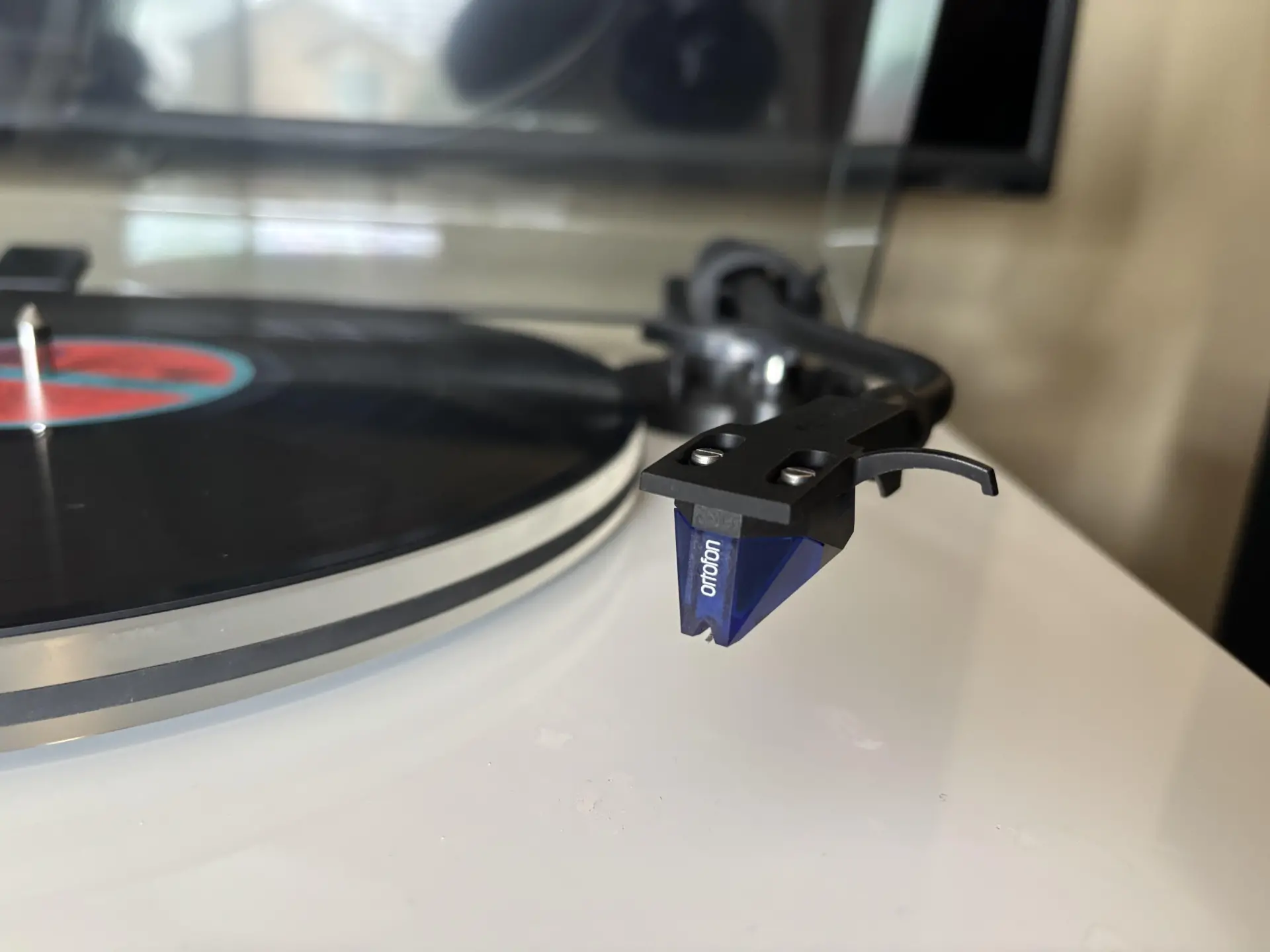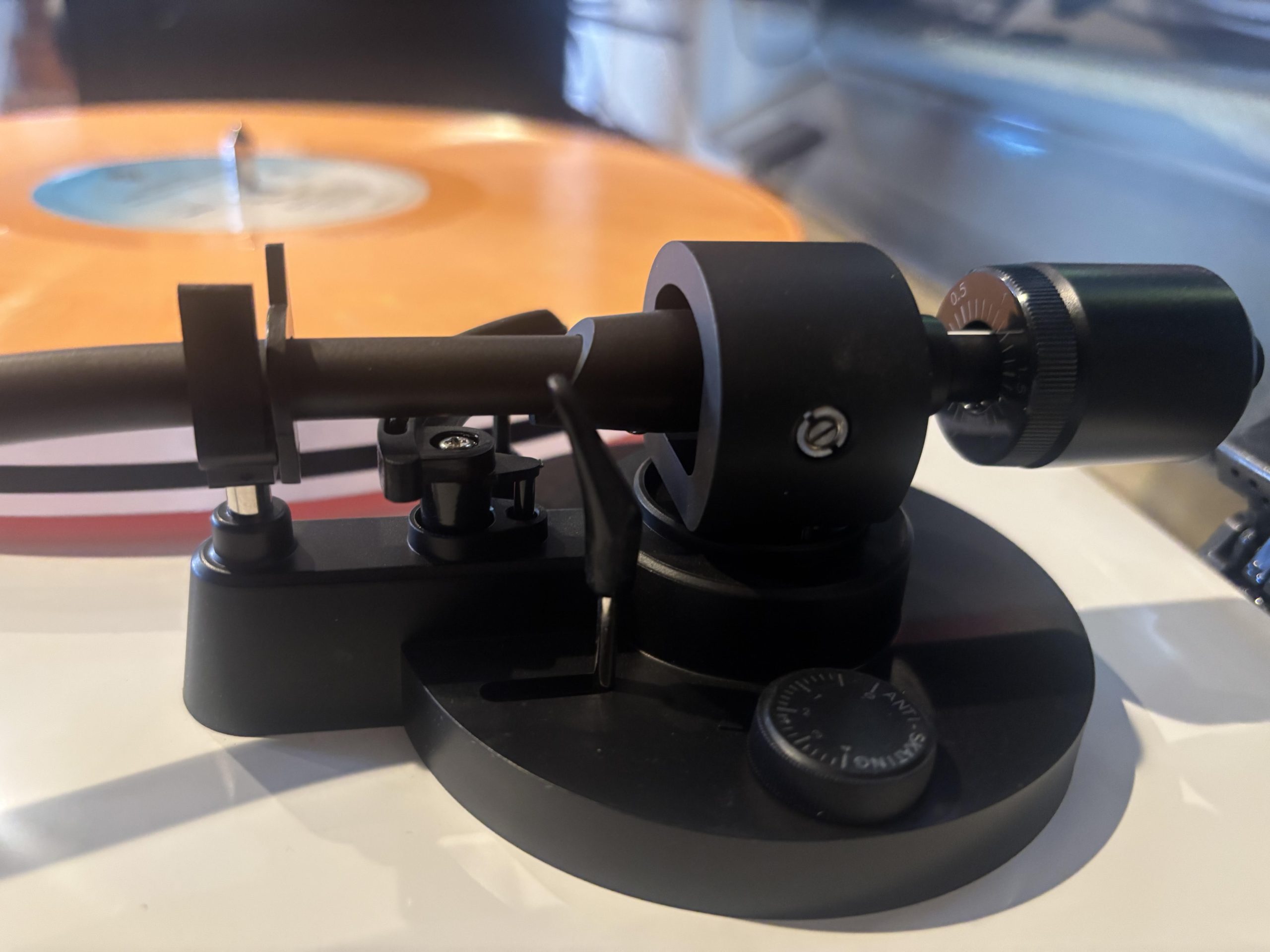
If you’ve ever wondered what all the pieces on your turntable do—or why your vinyl sounds different depending on the cartridge—this is the post for you. Understanding the needle (stylus), cantilever, and cartridge is key to getting the best sound from your records and protecting your collection.
What Is a Stylus (Needle)?
The stylus is the part of the turntable that physically touches the vinyl. It rides in the grooves and reads the vibrations encoded in them.
Key features:
-
Usually made of diamond (the hardest material, which resists wear)
-
The tip comes in different shapes:
-
Conical / spherical – simple, durable, lower fidelity
-
Elliptical – more precise, better at tracing grooves
-
Shibata / MicroLine / Fine Line – audiophile-grade, captures maximum detail
-
-
Transfers vibrations to the cantilever
Tip: A worn stylus can permanently damage your records, so replace it when it’s dull or damaged.
The Cantilever: The Stylus Holder
The cantilever is the tiny rod that holds the stylus tip. It acts like a lever, transferring the movement from the groove to the cartridge.
Important details:
-
Usually made of aluminum, boron, or sapphire
-
Must be perfectly straight and lightweight
-
Suspended by a tiny elastic suspension that allows it to move freely in all directions
If the cantilever is bent, the stylus won’t track correctly, and you’ll notice distortion or skipping.
Suspension: The Small But Critical Component
The suspension surrounds the cantilever and controls how it moves.
-
Usually made of rubber or elastomer
-
Provides the proper vertical and lateral compliance
-
Ensures the stylus stays in the groove without bouncing
Why it matters: Too stiff or too loose a suspension affects tracking and sound quality.
Cartridge: Where the Stylus Becomes Sound
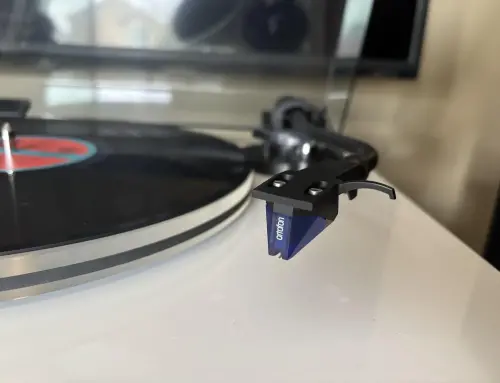
The cartridge holds the cantilever and stylus and converts the mechanical vibrations into an electrical signal that your amplifier can play.
Main Types:
-
Moving Magnet (MM)
-
Stylus is replaceable
-
Affordable, easy to upgrade
-
Popular in entry-level and mid-range turntables
-
-
Moving Coil (MC)
-
Stylus and coil are fixed
-
Higher fidelity
-
Requires more amplification (often uses a step-up transformer)
-
Inside a Cartridge:
-
Magnet or coil system: Converts stylus movement into an electrical signal
-
Cartridge body: Houses the mechanism and attaches to the headshell
-
Terminals: Connect to the tonearm wires
Headshell and Tonearm: How Everything Connects
The headshell is the piece that holds the cartridge and attaches to the tonearm. It allows precise alignment of the cartridge.
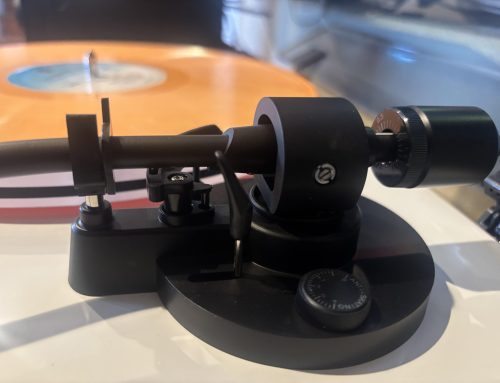
The tonearm is the lever that lets the stylus track the record from start to finish. It has:
-
Counterweight: Balances the tonearm to set tracking force
-
Anti-skate mechanism: Prevents the arm from pulling inward
-
Pivot and bearings: Allow smooth horizontal and vertical movement
Proper tonearm setup is essential—an incorrectly balanced arm can damage records and reduce sound quality.
Putting It All Together
Here’s the chain of sound:
-
Stylus tip sits in the groove and vibrates
-
Cantilever transfers the movement
-
Suspension ensures smooth motion
-
Cartridge converts motion to an electrical signal
-
Tonearm and wires carry the signal to your preamp
-
Speakers reproduce the sound
Why Understanding These Parts Matters
-
Choosing the right stylus shape can improve fidelity
-
Knowing when to replace your stylus protects your records
-
Correct tonearm and cartridge setup prevents skipping, distortion, and uneven wear
-
Helps you make informed decisions when upgrading cartridges or styluses
Tips for Maintenance
-
Clean the stylus regularly with a soft brush or specialized stylus cleaner
-
Avoid touching the cantilever or suspension directly
-
Align cartridges carefully to avoid groove wear
-
Replace the stylus according to manufacturer recommendations
Final Thoughts
The stylus, cantilever, suspension, and cartridge are all small, delicate parts—but they’re the heart of your vinyl playback system. Understanding each part gives you more control over sound quality, protects your collection, and helps you get the most out of your turntable setup.
A high-quality cartridge and properly maintained stylus can make a huge difference, whether you’re spinning a classic Neil Young LP or a new 180g reissue.
FAQ
What is the difference between a stylus and a needle?
They are the same; “stylus” is the technical term.
Can I upgrade just the stylus or do I need a new cartridge?
For most moving magnet cartridges, you can upgrade the stylus alone. For moving coil cartridges, you usually replace the entire cartridge.
How often should I replace my stylus?
Typically after 500–1,000 hours of play, or sooner if damaged.
Does stylus shape really matter?
Yes — an elliptical or fine-line stylus captures more detail and tracks the groove more accurately than a simple conical tip.