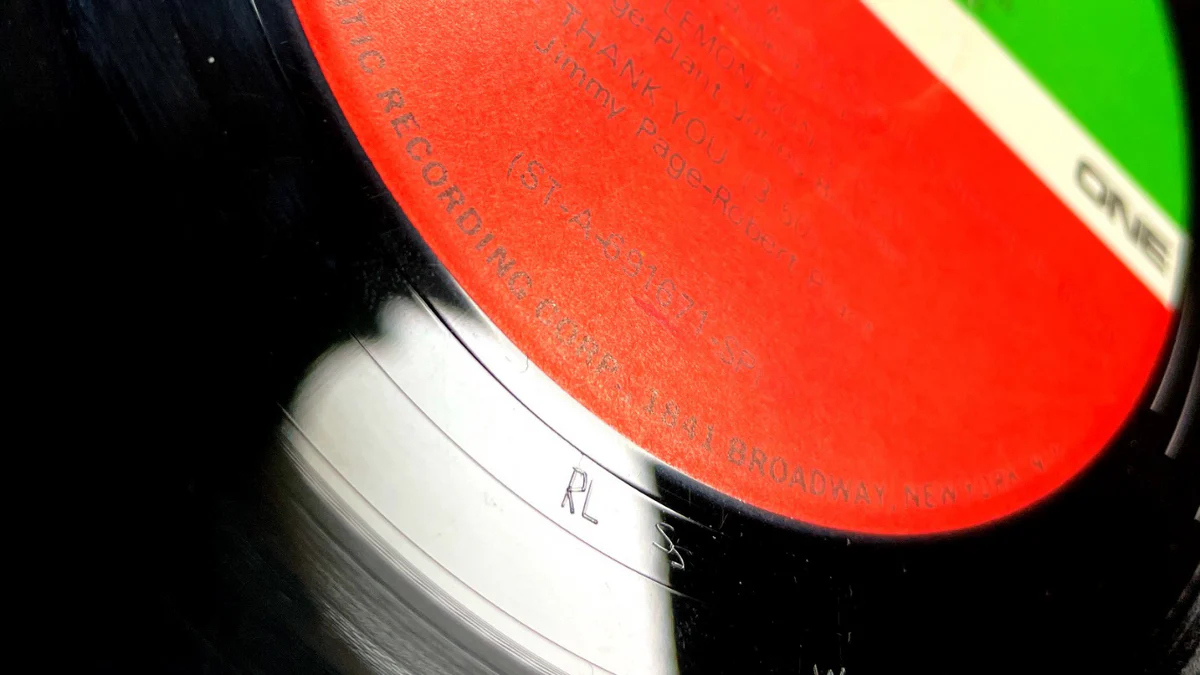
If you’re a vinyl collector or even just dipping your toes into rare pressings, chances are you’ve heard whispers about the fabled “Hot Mix” version of Led Zeppelin II. I’m talking about the US original pressing mastered by Robert Ludwig (both sides marked RL and/or SS) on Atlantic Records (catalog SD 8236) which – legend (and sound tests) suggest – sounds just a little more alive than many of the subsequent re-pressings.
Here’s what you need to know:
1. What makes it “Hot”?
The “Hot Mix” name comes from the high output, wide dynamic range, and bold mastering that Ludwig applied. Collectors say it’s so aggressive that cheap turntables could struggle to track or even skip. According to one enthusiast:
“This is easily one of the top 5 best-sounding albums in my collection… Bonham’s drums absolutely pummel your ears in the best possible way.”
That “pummel” effect is part of what gives this pressing its aura. The later versions were apparently dialed down after Atlantic’s A&R or production team deemed the first batch too loud or too extreme.
2. How to identify it
Here are some key identifiers when you’re hunting for the real deal:
Look for “RL/RL” (both sides mastered by Robert Ludwig) in the matrix/run-out area.
Some copies also carry “RL/SS” — the “SS” stands for Sterling Sound, another mastering facet.
First press US: label with the 1841 Broadway NYC address on Atlantic labels.
Strong physical presence: because the mastering is hot, outer grooves may sound busy or loud; condition matters (groove wear, pops, etc).
Beware of lookalikes: Many later pressings are similar in appearance but lack the “RL/…” runouts or carry different matrix codes.
3. Why it’s so sought-after
Sound quality: Many collectors believe this pressing surpasses others in clarity, punch, and fidelity—especially with good equipment.
Rarity: Because the release was apparently short-run (and later replaced with a scaled-down mastering), originals are harder to find and command higher prices.
Collectible lore: The story itself adds mystique—“did you find the real RL/SS mix?” becomes part of the treasure hunt.
4. What to watch out for
Condition is key. Even a great mastering can be compromised by heavy wear, warps, scratches. For such a legendary pressing, a mint or near-mint copy is especially desirable.
Beware of “false positives”: Label variations or reissues may carry similar aesthetics but lack the true RL/SS run-out, or may be later pressings with different mastering.
Equipment matters: To really appreciate the difference, you’ll want a turntable setup capable of handling deep mastering (good tracking weight, stylus condition, clean playback). On very cheap gear, the differences might be muted.
5. Should you chase it?
At Invincible Vinyl we always tell folks: buy the copy you can afford and enjoy. If you stumble upon a genuine RL/SS “Hot Mix” at a fair price and in nice condition—go for it. If not, a later pressing can still serve you well. The story is cool, the sound is real—but the joy comes from the music itself.
So next time you’re crate-digging, keep an eye out for those subtle run-out codes, handle the record gently, and maybe you’ll stumble on a piece of vinyl history.